
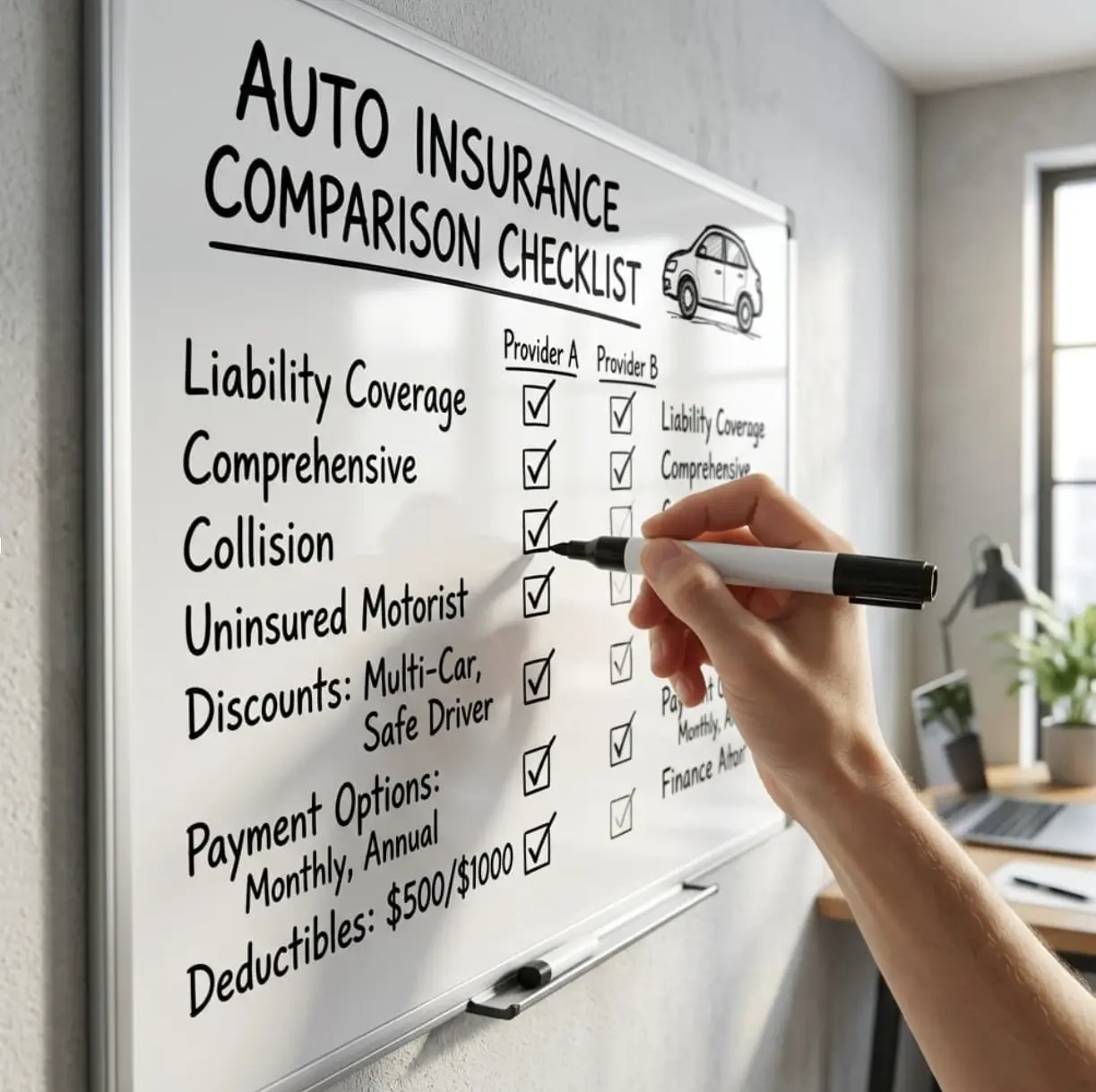
Finding inexpensive auto insurance sounds simple. Request a few quotes, compare the monthly prices, and choose the one that fits your budget.
In reality, it isn't always that straightforward.
Two quotes can carry very different prices even when they appear to offer similar coverage. In most cases, the gap comes down to deductibles, discounts, payment options, or even small details entered during the quoting process — and if you're only reading the bottom line, you'll never see them. As we cover in why the cheapest car insurance isn't always the lowest price, the lowest number on the page and the best value for your situation aren't always the same policy.
Before choosing a policy based on price alone, take a few minutes to work through this checklist. It can help you compare inexpensive auto insurance quotes more accurately — and feel more confident about the policy you choose.
Step 1: Compare the Same Coverage
Before comparing prices, make sure each insurance company is quoting the same coverage selections.
Even small differences between quotes can make one policy look cheaper than another when it simply covers less. When every company is quoting the same coverage, you get a much clearer picture of which one is offering the best value for your situation.
As you compare quotes, review items such as:
- Liability coverage limits
- Whether comprehensive and collision coverage are included, if you've requested them
- Any optional coverages you've chosen
- Deductible amounts, if applicable
If you're unsure what each line actually protects, our guides to car insurance coverage types and full coverage vs. liability explain what you're really comparing.
Before moving on, confirm:
- ✓ Each quote is based on the same coverage selections.
- ✓ Every company is quoting the same policy options you requested.
- ✓ You're comparing similar quotes across every insurance company.
Step 2: Review the Deductibles
If you've requested comprehensive or collision coverage, take a moment to review the deductible shown on each quote.
Insurance companies can build quotes using different deductible amounts. If those amounts aren't the same, comparing monthly premiums won't give you an accurate picture of how the quotes actually stack up — a lower premium may simply reflect a higher deductible you'd owe at claim time.
The goal isn't to choose one deductible over another. It's to make sure you understand what's included in each quote so you can compare fairly. Our $500 vs. $1,000 deductible guide and our overview of how deductibles work can help you decide which amount fits your budget.
Before moving on, confirm:
- ✓ The deductible amount is clearly listed on each quote.
- ✓ You're comparing quotes with the same deductible amount, if that's your goal.
- ✓ You understand which deductible is included before making a decision.
Step 3: Check That Every Available Discount Has Been Applied
Discounts can play a significant role in helping drivers find inexpensive auto insurance.
But not every insurance company offers the same discounts, and they aren't always applied automatically during the quoting process. Depending on the company, you may qualify for savings such as:
- Multi-vehicle
- Homeownership
- Renters insurance bundles
- Military
- First responder
- Defensive driving
- Paperless billing
- Auto Pay
- Paid in full
- Continuous insurance
Individually these look small, but stacking discounts the right way often moves a premium more than switching to a thinner policy would — without giving up any protection. Many drivers are surprised by the discounts they already qualify for, and a quick conversation with your agent is the fastest way to confirm none of them were left off the quote.
Before moving on, confirm:
- ✓ Ask which discounts have already been applied.
- ✓ Ask if there are any additional savings you may qualify for.
Step 4: Compare More Than the Monthly Payment
It's natural to focus on the monthly payment, but it shouldn't be the only number you review.
Two companies may quote similar monthly premiums while offering very different payment schedules or billing options. Looking past the monthly figure gives you a clearer view of the overall cost of the policy and how it actually fits your budget. Some companies may offer:
- Monthly payments
- Bi-weekly payment options
- Discounts for paying the policy in full
The way a premium is divided up matters as much as the number itself — our comparison of monthly vs. six-month premiums shows how the same coverage can feel more or less affordable depending on the schedule.
Before moving on, confirm:
- ✓ Monthly payment reviewed.
- ✓ Payment schedule reviewed.
- ✓ Total policy premium reviewed.
Step 5: Verify the Vehicle Information
Even a small difference in your vehicle information can change your quote.
Before choosing an inexpensive auto insurance policy, confirm that each quote reflects the same vehicle details:
- Year, make, and model
- Vehicle trim, if applicable
- Estimated annual mileage
- Garaging address
- Primary vehicle use
Accurate information helps ensure you're comparing quotes — not correcting mistakes. Mileage in particular is a genuine lever you control, and as we explain in how annual mileage affects your premium, reporting it accurately can work in your favor.
Before moving on, confirm:
- ✓ Vehicle information is correct.
- ✓ Mileage is accurate.
- ✓ Garaging address matches.
Step 6: Double-Check Driver Information
Insurance companies calculate premiums using the information provided during the quote process. Something as simple as an incorrect address, a missing driver, or outdated insurance history could change the premium you're seeing.
Before making your decision, review:
- Driver names
- Date of birth
- Address
- Driver's license information
- Prior insurance information, if requested
Prior coverage matters more than most drivers expect — even a brief gap can affect your rate, as we cover in what a car insurance lapse really costs. Taking a minute to verify these details now may prevent unexpected changes later.
Before moving on, confirm:
- ✓ Driver information is accurate.
- ✓ Address is correct.
- ✓ Insurance history has been reviewed.
Step 7: Ask How Long the Quote Is Valid
One detail many drivers overlook is the quote's expiration date.
Insurance quotes aren't always available indefinitely. Depending on the company, rates may change after a certain period — or if information on the application changes. If you're comparing several companies over multiple days, ask how long each quote remains valid before making your final decision.
Before moving on, confirm:
- ✓ Ask when the quote expires.
- ✓ Ask whether the premium could change before purchasing.
Step 8: Compare Multiple Insurance Companies
One of the most effective ways to find inexpensive auto insurance is to compare quotes from more than one company.
Every insurer evaluates risk differently, which means two companies may quote very different premiums for the same driver and vehicle. Rather than relying on a single quote, comparing several options gives you a broader picture of what's available — the same principle a good agent applies when they read your quote like an insider instead of taking the first number at face value.
Before you choose a policy:
- ✓ Compare multiple companies.
- ✓ Review each quote using the same checklist.
- ✓ Compare more than just the monthly premium.
Your Inexpensive Auto Insurance Quote Checklist
Before purchasing a policy, work through this final checklist:
| Review before you buy | ✓ | | --- | :---: | | Same coverage selections | ☐ | | Same deductibles | ☐ | | Discounts reviewed | ☐ | | Payment options compared | ☐ | | Vehicle information verified | ☐ | | Driver information verified | ☐ | | Quote expiration checked | ☐ | | Multiple companies compared | ☐ |
A Better Comparison Often Leads to Better Value
Finding inexpensive auto insurance isn't necessarily about choosing the lowest number on the page. It's about comparing quotes carefully, understanding what's included, and making sure every quote is built using the same information.
Working through a simple checklist before purchasing a policy can make shopping less stressful, help you spot the meaningful differences between quotes, and give you real confidence in your decision. And if you'd rather not build eight quotes yourself, our full walkthrough on comparing quotes the right way covers the same ground step by step.
If you're still unsure after comparing your quotes, checking in with an insurance agent can provide additional peace of mind. They can answer your questions, explain what you're seeing, and help you feel confident before purchasing a policy. At Cheapest Auto Insurance, we're always happy to review your quote and help you find coverage that works for your situation.
Compare Every Carrier in About a Minute
Instead of building the same quote eight times, let one local agency do it for you. Cheapest Auto Insurance is a Tulsa-based agency that shops multiple carriers to find your lowest rate on car insurance in Oklahoma — same coverage, every company we shop, no pressure.
Start your free quote online in about a minute, or call or text a local agent at (800) 988-3794.
Preguntas frecuentes
How should I compare inexpensive auto insurance quotes?
Compare quotes using the same coverage limits, deductibles, vehicle information, driver details, and optional coverages. This helps ensure you are making a fair comparison between insurance companies.
Why is it important to compare the same coverage on every quote?
Quotes with different liability limits, deductibles, or optional coverages can create misleading price differences. Matching the coverage selections helps you understand which policy offers the best value.
What discounts should I ask about when comparing auto insurance quotes?
Available discounts may include multi-vehicle, homeownership, renters insurance bundles, military, first responder, defensive driving, paperless billing, automatic payment, paid-in-full, and continuous insurance discounts.
Should I compare more than the monthly auto insurance payment?
Yes. Review the total policy premium, payment schedule, installment options, fees, and any paid-in-full discounts in addition to the monthly payment.
Can incorrect vehicle or driver information affect an insurance quote?
Yes. Incorrect details such as mileage, garaging address, vehicle trim, listed drivers, date of birth, or prior insurance history may affect the quoted premium and could cause the price to change later.
How long is an auto insurance quote valid?
Quote validity varies by insurance company. Rates may change after the quote expires or if information on the application changes, so ask when each quote expires before making a decision.
Why should I compare quotes from multiple insurance companies?
Every insurance company evaluates risk differently, so the same driver and vehicle may receive different rates. Comparing multiple companies gives you a broader view of available pricing, discounts, and payment options.